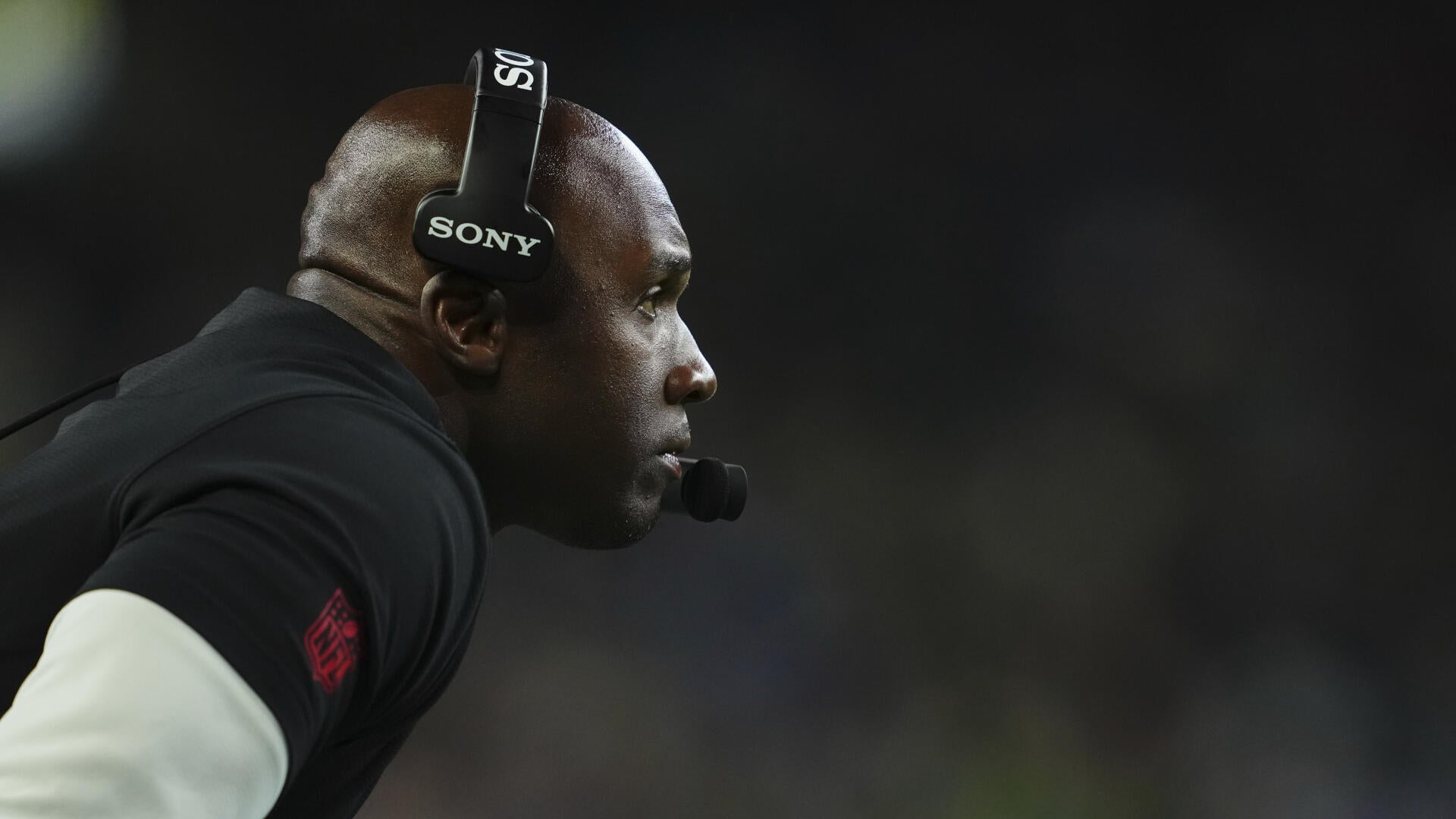
DeMeco Ryans Addresses Late-Game Kickoff Gaffe: Plan ‘Was Kicking the Ball Out of Bounds’
On a night riddled with offensive shortcomings, a special teams blunder ultimately sealed the Houston Texans’ fate in their 27-19 "Monday Night Football" defeat against the Seattle Seahawks. With the clock ticking down and the game hanging in the balance, a crucial kickoff decision went awry, leaving the Texans lamenting missed opportunities and a lack of execution.
The Texans had clawed their way back to within one possession, trailing by just eight points with 2:04 remaining in the fourth quarter. C.J. Stroud, the Texans’ promising rookie quarterback, connected with Woody Marks for a 4-yard touchdown pass, igniting a glimmer of hope for a potential comeback. With one timeout still in their pocket and the two-minute warning looming, the Texans were strategically positioned to regain possession of the ball with approximately one minute left on the clock, provided they could force the Seahawks into a quick three-and-out.
However, the ensuing kickoff proved to be a turning point, as Ka’imi Fairbairn, the Texans’ reliable kicker, inexplicably kicked the ball into the field of play instead of aiming for the sidelines. George Holani, the Seahawks’ return specialist, capitalized on the miscue, smartly fielding the ball and advancing it forward, effectively burning six precious seconds off the clock and triggering the two-minute warning.
"The plan at the end of the game was kicking the ball out of bounds so we could utilize the two minute and then had a timeout," Texans head coach DeMeco Ryans explained with visible frustration. "And we did not execute that. Again, just goes to the entire game. Frustrating that we’re not executing the things that we’re coached to do."
Ryans’ disappointment was palpable, as he emphasized the importance of executing the game plan, especially in critical late-game situations. The failed kickoff execution not only squandered valuable time but also disrupted the Texans’ strategic approach to regaining possession and mounting a potential game-winning drive.
The kick itself did not come particularly close to sailing out of bounds, further highlighting the execution failure. This misstep drew parallels to a similar incident earlier in the season involving the Chicago Bears. In that instance, the Bears trailed the Minnesota Vikings 27-24 with 2:02 remaining when Ty Chandler returned Cairo Santos’ kickoff, triggering the two-minute warning and hindering the Bears’ comeback efforts.
Following the Bears’ game, their coach, Johnson, acknowledged the intent behind the kickoff strategy, stating, "The intent was for the ball to go out of the end zone."
While kicking the ball out of bounds or through the end zone may grant the opposing team favorable field position, with the ball being placed at their own 40-yard line for out-of-bounds kicks and at their own 35-yard line for kicks through the end zone, preserving the two-minute warning often outweighs the positional disadvantage. The ability to stop the clock and strategically manage timeouts in the final minutes of a game can be crucial for mounting a comeback or securing a victory.
As Ryans alluded to, the Texans’ loss was not solely attributable to the kickoff gaffe. A lack of execution plagued the team throughout the game, contributing to their offensive struggles and missed opportunities. The Texans managed to score just one touchdown and one field goal on three trips to the red zone, failing to capitalize on prime scoring chances. Additionally, they struggled to convert multiple short-yardage situations, hindering their ability to sustain drives and keep the Seahawks’ offense off the field.
Adding insult to injury, the Texans appeared to have secured a crucial third-down stop late in the game, potentially giving them the ball back with a few seconds remaining. However, Tim Settle was flagged for an unnecessary roughness penalty, gifting the Seahawks a first down and effectively sealing the Texans’ fate.
The combination of special teams miscues, offensive inefficiencies, and untimely penalties ultimately proved too much for the Texans to overcome, resulting in a frustrating loss that left them searching for answers and emphasizing the need for improved execution in all facets of the game. The Texans will undoubtedly be looking to address these shortcomings as they prepare for their upcoming games, aiming to translate their potential into tangible results on the field. The focus will be on honing their execution, minimizing errors, and capitalizing on opportunities to secure victories and solidify their position in the league.
